Customer Background
The customer is a valve component importer based in Southern California. They source ductile-iron and cast-iron castings for the U.S. waterworks and industrial valve market, supplying finished valve bonnets to valve manufacturers and distributors across the western states.
The company had previously sourced equivalent castings from mainland-China foundries on a regular FOB basis. This order was produced and loaded from Taiwan, which put the shipment on a different tariff position than their established sourcing line. They engaged DTFU Logistics to handle the FOB Kaohsiung move, the U.S. entry, and the duty treatment, with the requirement that the country-of-origin tariff position be confirmed before booking rather than discovered at entry.
Cargo Information
| Item | Detail |
|---|---|
| Commodity | Valve bonnets (cast iron / ductile iron castings, machined) |
| Mode | Ocean freight FCL |
| Origin | Kaohsiung, Taiwan |
| Destination | Los Angeles, CA, United States |
| Incoterm | FOB Kaohsiung |
| Container | 1×40HQ |
| Gross weight | 21,300 kg |
| Volume | 34 CBM |
| Pallets | 16 (heavy) |
The shipment consisted of 16 heavy-duty export pallets of machined valve bonnets. At 21,300 kg gross against roughly 34 CBM, the cargo was weight-dense: the load consumed a small fraction of the 40HQ's usable volume but close to 80% of its payload capacity. The average per-pallet weight was approximately 1,330 kg, which made pallet base rating and floor distribution part of the loading design.
Why This Shipping Method
A 40HQ full-container move was selected over LCL consolidation. At 21.3 t of weight-dense castings, the cargo was outside the practical LCL envelope: heavy castings billed by CBM in a shared container would have carried a disproportionate share of the container's deadweight and the per-unit freight would have been higher than an FCL. The volume sat at 34 CBM, which left the 40HQ lightly filled by cube but near its weight limit — the correct trade for a cargo that weighs out before it cubes out.
The routing used a direct transpacific service from Kaohsiung to Los Angeles, followed by drayage to the customer's warehouse. A West Coast discharge was the natural choice for a Southern California destination: it avoided the inland rail leg and kept the delivery window short, at 11 days at sea plus two days of clearance and terminal handling.
The decisive factor in the method selection was the country-of-origin tariff position, not the routing. The castings are of Taiwanese origin and loaded at Kaohsiung. Because Section 301 tariffs under the China tariff lists attach to goods of Chinese origin, the Section 301 surcharge did not apply to this shipment. Against a mainland-China-origin alternative on the same valve parts HTS line, a Section 301 List 3 rate would have applied on top of the MFN rate, materially changing the per-piece landed cost. Because the goods are steel-based castings, the Section 232 steel treatment was also checked against the valve HTS line during costing; the line is outside the Section 232 steel product annex, so no additional steel duty attached.
Shipping Process
Step 1 — Staging, rust-preventive treatment, and palletization (Kaohsiung)
The castings arrived at the loading point on heavy-duty export pallets. Each machined face was coated with a rust-preventive oil and covered with VCI (vapor corrosion inhibitor) film before the pallets were banded with steel strapping. Per-pallet weights were recorded so the floor distribution could be planned against the container payload.
Step 2 — Container loading and lashing
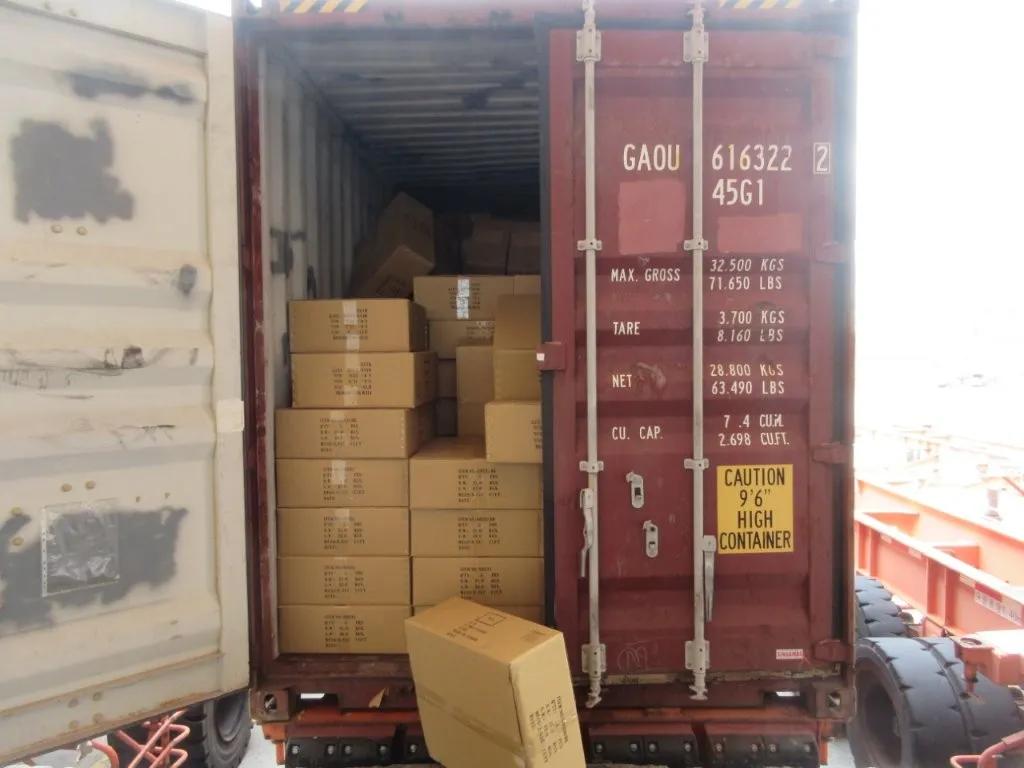
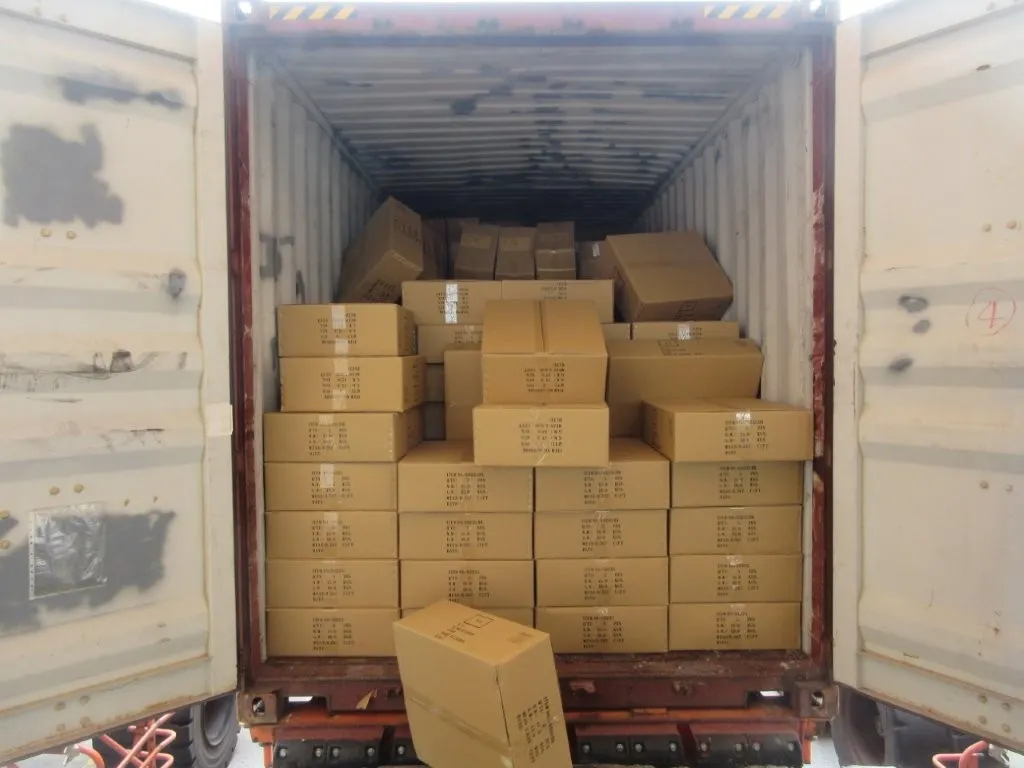
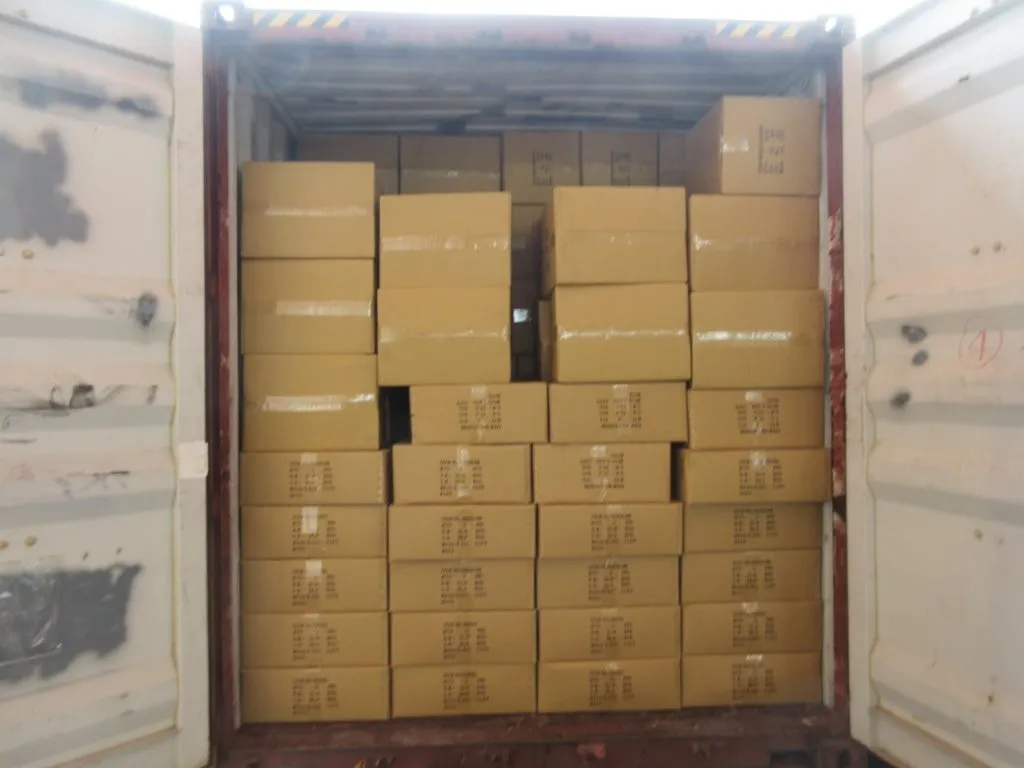
The 16 pallets were loaded into the empty 40HQ with the weight spread across the floor and the heavier pallets positioned to keep the container balanced. Each pallet was lashed at the ISO lashing rings, and the outer pallets were braced against the container walls to prevent lateral shift during the crossing. The load plan was checked against the container's rated payload with margin before sealing.
Step 3 — Export customs clearance and ISF filing
The export declaration was filed in Taiwan with the commercial invoice, packing list, and Taiwan Certificate of Origin. The ISF (Importer Security Filing, "10+2") was submitted to CBP no later than 24 hours before lading, with the container stuffing location recorded as Kaohsiung. The HTS line, origin, and unit values used on the invoice were carried forward unchanged to the ISF and the U.S. entry.
Step 4 — Ocean freight (Kaohsiung → Los Angeles)
The container loaded onto a scheduled transpacific service at Kaohsiung. The ocean crossing to Los Angeles took 11 days.
Step 5 — U.S. clearance and drayage
After arrival, the container moved through U.S. customs under the valve parts HTS line. Following clearance and terminal handling at Los Angeles, the container was drayed to the customer's warehouse in Southern California and unloaded; the machined faces were inspected at the warehouse with no rust or damage reported.
Challenges Encountered
1. Origin determination and the Section 301 vs Section 232 tariff analysis
Because the goods loaded from Taiwan and are of Taiwanese origin, Section 301 China tariffs did not apply — but this had to be confirmed and documented rather than assumed. For a U.S. entry, origin is determined by substantial transformation, and a mis-stated origin on the invoice or a missing Certificate of Origin can prompt CBP to treat the goods as Chinese origin or open a country-of-origin query, exposing the customer to the Section 301 surcharge and a potential penalty on the entry. The castings are also steel-based, which required a separate check of whether the Section 232 steel treatment attaches to the valve HTS line — a distinct question from the 301 origin question, since Section 232 is product-line-driven rather than origin-driven.
2. Heavy-casting load weight distribution and lashing
At 21,300 kg gross across 16 pallets, the container ran close to its payload limit. The risk was load shift during an 11-day transit and through port handling: an unbalanced load, an overweight pallet base, or insufficient lashing can shift cargo, damage the container, or fail a weight inspection. The weight had to be distributed across the floor and each pallet secured against movement in all directions.
3. Rust prevention on machined cast-iron surfaces
The machined faces of the castings are clean, unprotected ferrous surfaces. On a humid transpacific crossing, condensation inside the container — from temperature swing and moisture in the air — can cause surface rust on those faces. For a machined valve component, surface rust is a rejection-grade defect, and it is not detectable until the container is opened at the destination.
How We Solved Them
For the origin and tariff analysis:
The Taiwan Certificate of Origin was obtained from the supplier before booking, and the origin statement was verified against the production location. The HTS classification was settled on the valve parts line (8481 series) and applied consistently on the commercial invoice, the packing list, the Taiwan export declaration, the ISF, and the U.S. entry. The Section 232 check was run against the steel product annex separately from the origin analysis, confirming the valve HTS line is not covered, so no Section 232 treatment attached. The customer was given a landed-cost comparison of the Taiwanese-origin shipment versus a mainland-China-origin alternative on the same line, so the Section 301 differential was quantified before the booking rather than discovered at entry.
For the heavy-casting load:
The load plan was finalized before the container drop. The 16 pallets were distributed across the floor with per-pallet weights recorded and the heavier pallets positioned to keep the container balanced. Each pallet was lashed at the ISO lashing rings and the outer pallets braced against the container walls, with the completed load checked against the payload rating with margin. The per-pallet weight was confirmed to be within the pallet base ratings so no base failure occurred under the strapping and handling load.
For rust prevention:
The machined faces were coated with a rust-preventive oil and wrapped in VCI film as part of the staging step, and desiccant was placed inside each pallet wrap. The treatment was applied before steel banding and completed before the container was sealed, which limited moisture ingress for the crossing. The faces were inspected at the warehouse on arrival; no rust was found.
Final Timeline
| Milestone | Timing |
|---|---|
| Cargo staged and rust-preventive treatment (Kaohsiung) | Day 1 |
| Palletization with steel banding | Day 1 |
| Container loading and lashing | Day 2 |
| Export customs clearance (Taiwan) and ISF filing | Day 2 |
| Vessel departure Kaohsiung | Day 3 |
| Arrival Los Angeles (11 days ocean transit) | Day 14 |
| U.S. customs clearance | Day 15 |
| Drayage to warehouse (Southern California) | Day 17 |
Total door-to-door transit time: 17 days
Final Cost
| Item | Cost (USD) |
|---|---|
| Ocean freight (1×40HQ, Kaohsiung → Los Angeles) | $3,050 |
| Origin THC, port fees, documentation | $400 |
| Rust-preventive treatment and lashing | $240 |
| ISF filing | $45 |
| U.S. customs clearance | $160 |
| Los Angeles terminal handling | $280 |
| Drayage to warehouse | $320 |
| Total door-to-door | $4,495 |
Note: the U.S. entry used the valve parts HTS line (8481 series). Because the goods are of Taiwanese origin, Section 301 China tariffs did not apply, and the Section 232 steel treatment was confirmed not to attach to this HTS line; only the MFN duty rate applied at entry and was collected separately. Figures reflect the spot rates for this shipment (July 2026) and vary with season, fuel surcharge, and carrier capacity.
Customer Review
"We priced the same part both as a mainland-China-origin casting and as this Taiwan-produced run, and the origin position decided the landed-cost comparison before freight was even discussed. The classification and the Section 232 check confirmed no steel duty attached to the valve line, and the container arrived in Los Angeles in 17 days door-to-door. The machined faces were inspected at the warehouse with no rust after the crossing."
— The customer's purchasing manager, Southern California
Lessons Learned
- Origin is a tariff decision, not a routing label. Because the castings loaded at Kaohsiung and are of Taiwanese origin, Section 301 China duties did not attach. For any casting with a third-country production base, confirming origin and carrying the Certificate of Origin through to the U.S. entry is where the landed-cost difference is realized — and it must be settled before booking, not at entry.
- Section 232 is HTS-driven and has to be checked separately from Section 301. Steel-based goods may or may not carry Section 232 treatment depending on the product line, independent of their origin. Confirming that the valve parts line sits outside the steel product annex removed a duty exposure and a documentation risk that an origin-only analysis would have missed.
- Weight-dense castings make the load plan part of the transit risk. At 21.3 t across 16 pallets, floor distribution, lashing, and bracing against the container walls were treated as engineering steps with per-pallet weights recorded, not as an afterthought at the container drop.
- Machined ferrous faces need an explicit rust-prevention step on humid routings. The oil-and-VCI treatment with desiccants cost a small fraction of the freight bill but prevented a rejection-grade surface defect that would only have surfaced at destination.