Customer: Confidential (Egypt-based Industrial Hydraulics Distributor, Alexandria)
Route: Port of Shanghai, China → Port of Alexandria, Egypt
Mode: Sea Freight — LCL (Less than Container Load)
Customer Background
The customer is an industrial hydraulics distributor based in Alexandria, Egypt. They supply high-pressure hydraulic and pneumatic components to local manufacturing plants, construction equipment dealers, and oilfield service companies operating in the Nile Delta region and the Suez Canal area.
The customer had previously sourced high-pressure tubing from European suppliers (Germany and Italy). While the European product quality was unquestionable, the pricing had become increasingly uncompetitive. Seeking cost reduction without sacrificing quality, they turned to Chinese manufacturers in Shanghai's industrial zone — one of the world's largest production hubs for hydraulic components. This was their first time importing high-pressure tubing from China, and they needed a freight forwarder who understood both the cargo's handling requirements and Egypt's import regulations.
They found DTFU Logistics through an online search and chose us based on our track record shipping industrial goods from China to the Middle East and North Africa.
Cargo Information
| Item | Details |
|---|---|
| Cargo | High-pressure seamless steel tubing (hydraulic grade) |
| Quantity | 480 pieces in various diameters (6 mm – 32 mm OD) |
| Length | 6 meters per piece (standard hydraulic tubing length) |
| Total Weight | ~4,200 kg |
| Total Volume | ~8.6 CBM |
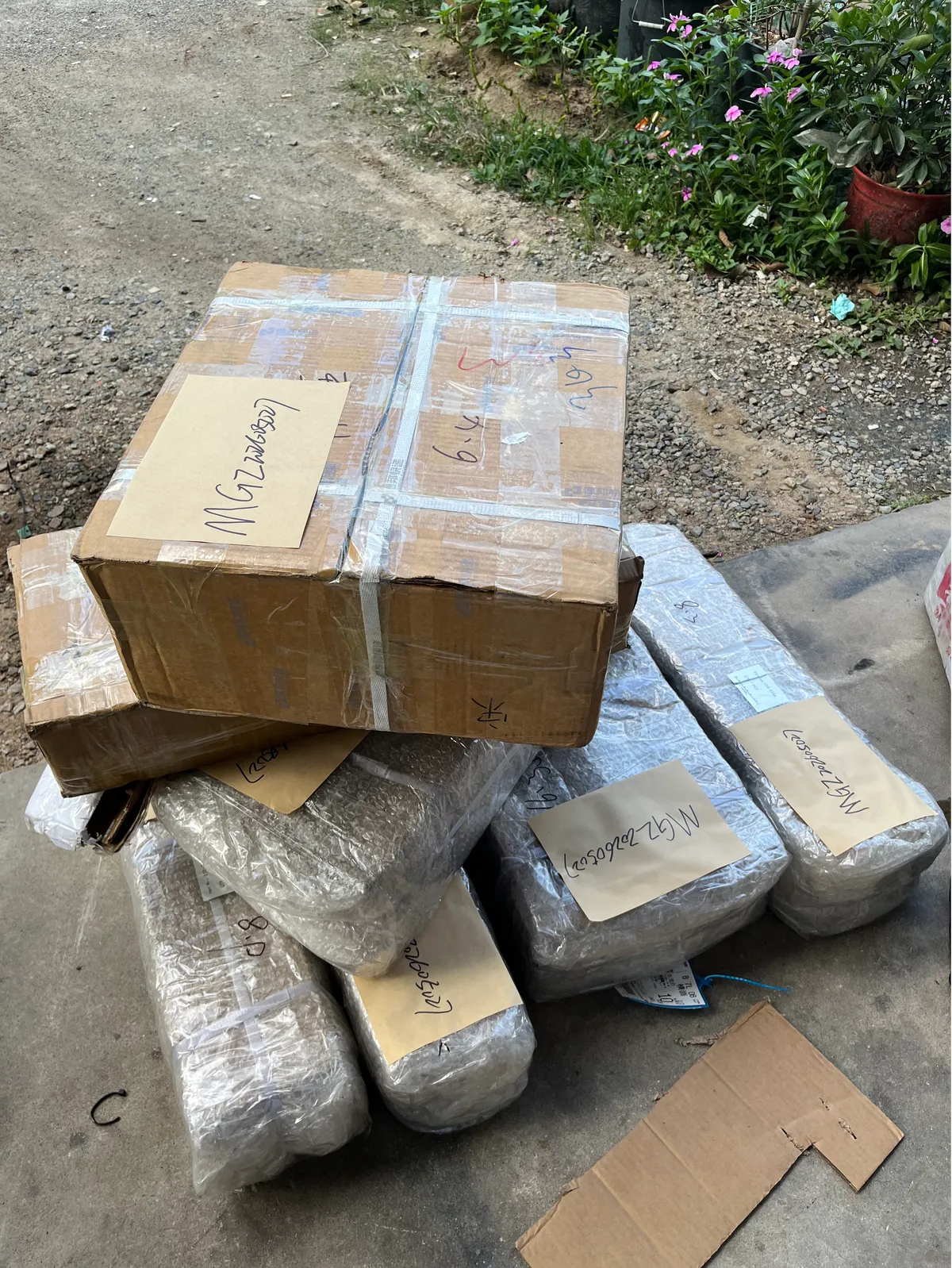
| Packaging | Custom wooden crates, foam-interleaved layers |
| Origin | Shanghai, China |
| Destination | Alexandria, Egypt |
| Incoterm | CIF Alexandria |
The tubing was manufactured to DIN 2391 / EN 10305-1 standard (seamless cold-drawn precision steel tubes for hydraulic systems). The 6-meter length was a critical dimension — long enough to be awkward for standard LCL consolidation but still manageable with proper crating.
Why This Shipping Method
Why LCL Instead of FCL?
At 8.6 CBM, the shipment did not come close to filling a 20GP container (~28 CBM usable). A dedicated FCL would have meant paying for 28 CBM of space while only using 8.6 CBM — wasteful and unnecessary. LCL was the clear economic choice:
| Comparison | LCL | 20GP FCL |
|---|---|---|
| Space paid for | 8.6 CBM | 28 CBM |
| Estimated cost (Shanghai → Alexandria) | ~$620 | ~$1,850+ |
| Savings | — | ~66% cheaper with LCL |
For a customer exploring their first China-Egypt shipment, keeping the initial investment low made sense. LCL allowed them to test the sourcing channel without committing to a full container.
Why Sea Freight Instead of Air?
High-pressure steel tubing is heavy. At 4,200 kg, air freight would have been prohibitively expensive — roughly $3.50–$5.00 per kg for this route, totaling $14,700–$21,000. Sea freight delivered a 95%+ cost saving with an acceptable transit time for a stock replenishment shipment.
Why Shanghai?
Shanghai is China's largest industrial port and a major hub for steel and metal products. The manufacturer specialized in hydraulic tubing was located in Baoshan District, Shanghai — just 40 km from the port — minimizing inland trucking costs.
Shipping Process
Step 1: Cargo Packing at Origin (Shanghai)
The high-pressure tubing required careful packing. Unlike general cargo that can be boxed and stacked, tube-shaped steel products are vulnerable to bending if not properly supported. The manufacturer's standard packaging was simple plastic strapping around bundles — acceptable for domestic transport but not for an LCL sea freight journey involving transshipment.
We instructed the manufacturer to construct custom wooden crates with the following specifications:
- Outer frame: 15 mm plywood, reinforced with timber battens at 1-meter intervals
- Internal support: Wooden cradles every 1.5 meters to prevent tube sagging
- Layer separation: Foam sheets between each layer of tubing
- End protection: Wooden end-caps to prevent tubes from shifting lengthwise
- Marked with: DTFU job number, HS code, "FRAGILE — DO NOT ROLL" warnings
Six crates were built, each holding 80 pieces of tubing arranged in alternating layers.
Step 2: Consolidation at Shanghai CFS
The crates were trucked from the factory in Baoshan to the Container Freight Station (CFS) at Shanghai Waigaoqiao Terminal. At the CFS, the crates were consolidated into a shared 20GP container alongside other cargo — textile rolls and auto components — bound for Alexandria.
Our documentation team verified the crate dimensions (6.2 m × 0.4 m × 0.4 m each) to ensure they would fit into the container alongside the co-loading cargo. The 6-meter crate length was tight but manageable when arranged diagonally in a 20GP container (internal length ~5.9 m usable).
Step 3: Export Customs Clearance (China)
Export declaration was filed under HS code 7304.31 (cold-drawn precision steel tubes). Documentation included:
- Commercial invoice and packing list
- Bill of lading
- Certificate of origin
- Mill test certificates per EN 10204 3.1
China Customs released the cargo on the same day — steel tube exports are routine and face no export restrictions.
Step 4: Main Carriage (Sea Freight with Transshipment)
The container departed Shanghai on a mainline vessel, transshipped at Port Kelang (Malaysia), and connected to a feeder vessel bound for Alexandria. The transshipment was unavoidable — direct Shanghai–Alexandria LCL services are rare, and most carriers route Egypt-bound cargo through Southeast Asian or Middle Eastern hubs.
Step 5: Nafeza Registration and Import Clearance (Egypt)
This was the most distinctive part of the process. Egypt operates the Nafeza — the National Single Window for trade. Under Nafeza regulations, all import shipments must be electronically registered and pre-approved before the vessel arrives at Alexandria Port.
Our local customs broker in Alexandria handled the Nafeza submission 5 days before ETA, uploading:
- Commercial invoice (certified by Egyptian embassy in Beijing)
- Packing list
- Bill of lading
- Certificate of origin (GSP Form A for duty preference)
- Import registration from the General Organization for Export and Import Control (GOEIC)
Step 6: Delivery to Customer's Warehouse
After clearance, the crates were delivered to the customer's warehouse in the Amreya industrial zone, southwest of Alexandria.
Challenges Encountered
1. Tube Length vs. Standard Crate Dimensions
The 6-meter tubing was too long for standard export crates (typically 1.2 m × 1.0 m × 1.0 m). Custom crating was essential, and the length meant the crates could not be stacked in the container — they had to be loaded side by side, reducing usable container floor space.
2. LCL Transshipment Handling Risk
LCL cargo is handled multiple times: stuffed at origin CFS, unloaded at transshipment hub, reloaded onto feeder vessel, and destuffed at destination. Each handling event introduces risk of damage. For tube-shaped cargo, improper handling (e.g., forklift tines striking the crate from the side) could easily bend the internal tubing.
3. Egypt's Nafeza Pre-Registration Requirement
Unlike many destinations where customs clearance starts after arrival, Egypt requires substantial documentation to be submitted electronically before the vessel reaches port. Missing the Nafeza deadline means the cargo sits at port — incurring daily demurrage charges that escalate quickly. For a first-time Egypt importer, this was unfamiliar territory.
4. GOEIC Compliance for Steel Imports
Egypt's General Organization for Export and Import Control (GOEIC) requires that certain industrial products — including steel tubes — meet Egyptian standard specifications (ESS). Without a GOEIC-registered conformity certificate, the shipment would be rejected.
How We Solved Them
Custom Crating Solution
Rather than forcing the tubing into standard crates, we arranged for a local crating company near the Shanghai factory to build purpose-built wooden crates. The crates were designed with:
- Internal "cradle" supports every 1.5 m to prevent bending
- Foam interleaving between layers to prevent surface scratching
- External reinforcement at all corners for forklift handling
- Clear "THIS SIDE UP" and "FRAGILE" markings in both English and Arabic
The total cost for six custom crates: approximately $240 — a modest investment that prevented what could have been thousands of dollars in damaged goods.
Transshipment Monitoring
We issued a detailed cargo handling guide to the CFS operators at Port Kelang via our Malaysia network partner, specifying that the crates must be handled by forklift from the end (not the side) and stored flat on a single layer. A shipment status alert was set up so the DTFU operations team could track every container movement through the transshipment.
Nafeza Registration — Done Proactively
Our Alexandria-based customs broker began preparing the Nafeza submission as soon as the vessel departed Shanghai. By day 12 of the sea transit, all documents were submitted electronically. The GOEIC registration was verified, and the conformity certificate (matching the customer's Egyptian standard requirements) was confirmed valid before arrival. When the cargo reached Alexandria, clearance took only 2 working days.
GOEIC Compliance Check
Before shipment, we cross-checked the manufacturer's mill certificates against GOEIC's published standards for imported steel tubes. The tubing's DIN 2391 specification was accepted as equivalent to the Egyptian standard after we provided a supplementary technical data sheet translated into Arabic. This pre-clearance work eliminated what could have been a costly rejection at destination.
Final Timeline
| Phase | Duration | Cumulative |
|---|---|---|
| Factory packing and custom crating | 3 days | Day 1–3 |
| Trucking to Shanghai CFS | 1 day | Day 4 |
| Consolidation at CFS | 1 day | Day 5 |
| Export customs clearance | 1 day | Day 6 |
| Vessel departure from Shanghai | — | Day 7 |
| Sea transit (Shanghai → Port Kelang) | 6 days | Day 7–12 |
| Transshipment at Port Kelang | 2 days | Day 13–14 |
| Feeder transit (Port Kelang → Alexandria) | 8 days | Day 15–22 |
| Nafeza clearance (pre-arrival) | 5 days (parallel) | Day 12–16 |
| Import customs clearance at Alexandria | 2 days | Day 23–24 |
| Port de-stuffing and cargo pick-up | 1 day | Day 25 |
| Delivery to customer warehouse (Amreya) | 1 day | Day 26 |
Total door-to-door transit time: 26 days
Final Cost
| Item | Cost (USD) |
|---|---|
| Custom wooden crating (6 crates, materials + labor) | $240 |
| Trucking (Baoshan factory → Shanghai CFS, 40 km) | $120 |
| CFS consolidation and handling fee | $85 |
| Export customs declaration and documentation | $110 |
| LCL ocean freight (8.6 CBM, Shanghai → Alexandria via Port Kelang) | $510 |
| Transshipment handling fee (Port Kelang) | $65 |
| B/L documentation and courier | $75 |
| Egypt Nafeza registration and customs brokerage | $220 |
| GOEIC conformity certificate processing | $80 |
| Port charges and THC (Alexandria) | $150 |
| Local drayage (Alexandria Port → Amreya warehouse) | $180 |
| Cargo insurance (0.4% of declared value) | $95 |
Total: ~$1,930
The per-CBM cost of approximately $224 was excellent value for a specialized cargo requiring custom crating and transshipment, especially given the Egypt-specific regulatory requirements.
Customer Review
"This was our first time importing high-pressure tubing from China instead of Europe, and we were honestly a bit nervous about the quality and the shipping process. DTFU guided us through every step — the wooden crating solution was exactly what the cargo needed, and the crates arrived at our warehouse without a single dent or bent tube. The Nafeza process in Egypt can be confusing for newcomers, but their local broker handled everything before the ship even arrived. We have placed two more orders since this first shipment. Very satisfied with the cost savings and the service."
— Operations Manager, Alexandria Industrial Hydraulics Distributor
Lessons Learned
-
Custom crating is not optional for long tube/pipe cargo in LCL. Standard box crates cannot accommodate 6-meter tubing, and inadequate packing leads to bending during transshipment handling. The $240 invested in custom crates saved far more in potential damage claims.
-
Egypt's Nafeza system demands pre-arrival preparation. Unlike most destinations where customs clearance begins after cargo arrival, Egypt requires electronic documentation submission before the vessel docks. First-time importers to Egypt must have a local broker who understands this system.
-
LCL transshipment routes need proactive handling instructions. When cargo transships through intermediate ports, the origin CFS handling instructions may not automatically transfer to the transshipment hub. Providing explicit handling guides to the network partner at each touchpoint significantly reduces damage risk.
-
Shanghai remains the best origin for industrial steel products. The concentration of hydraulic component manufacturers in Shanghai, combined with the port's excellent LCL consolidation infrastructure, makes it the natural choice for Egypt-bound industrial shipments.
-
GOEIC compliance should be confirmed before shipment. Steel tube imports to Egypt require conformity with Egyptian standards. Pre-verifying that the manufacturer's technical specification meets GOEIC requirements — and having translated documentation ready — avoids costly delays at destination.
Ready to ship industrial tubing, pipes, or hydraulic components from China to Egypt or other destinations? Contact DTFU Logistics for a tailored LCL or FCL solution.