Customer Background
The customer is an industrial automation integrator based in Riyadh, Saudi Arabia. Their core business is assembling and commissioning control systems for HVAC plants and material-handling lines across the central region of the kingdom. This particular shipment fed a plant upgrade where the existing control hardware had to be replaced before a scheduled maintenance shutdown — a deadline fixed months in advance by the plant operator.
They had previously imported control components through sea freight on a regular basis. For this order, the supply chain lead time had been shortened by a production delay at the module manufacturer in Guangzhou, which left the customer with a much tighter window than their usual planning cycle allowed.
Cargo Information
| Item | Detail |
|---|---|
| Commodity | Control modules (PLC I/O modules, VFD control boards, industrial relays and associated wiring accessories) |
| Mode | Air freight |
| Origin | Guangzhou, China |
| Destination | Riyadh, Saudi Arabia |
| Incoterm | FOB Guangzhou |
| Gross weight | 286 kg |
| Volume | 1.9 CBM |
| Chargeable weight | 326 kg (volumetric weight exceeded gross weight) |
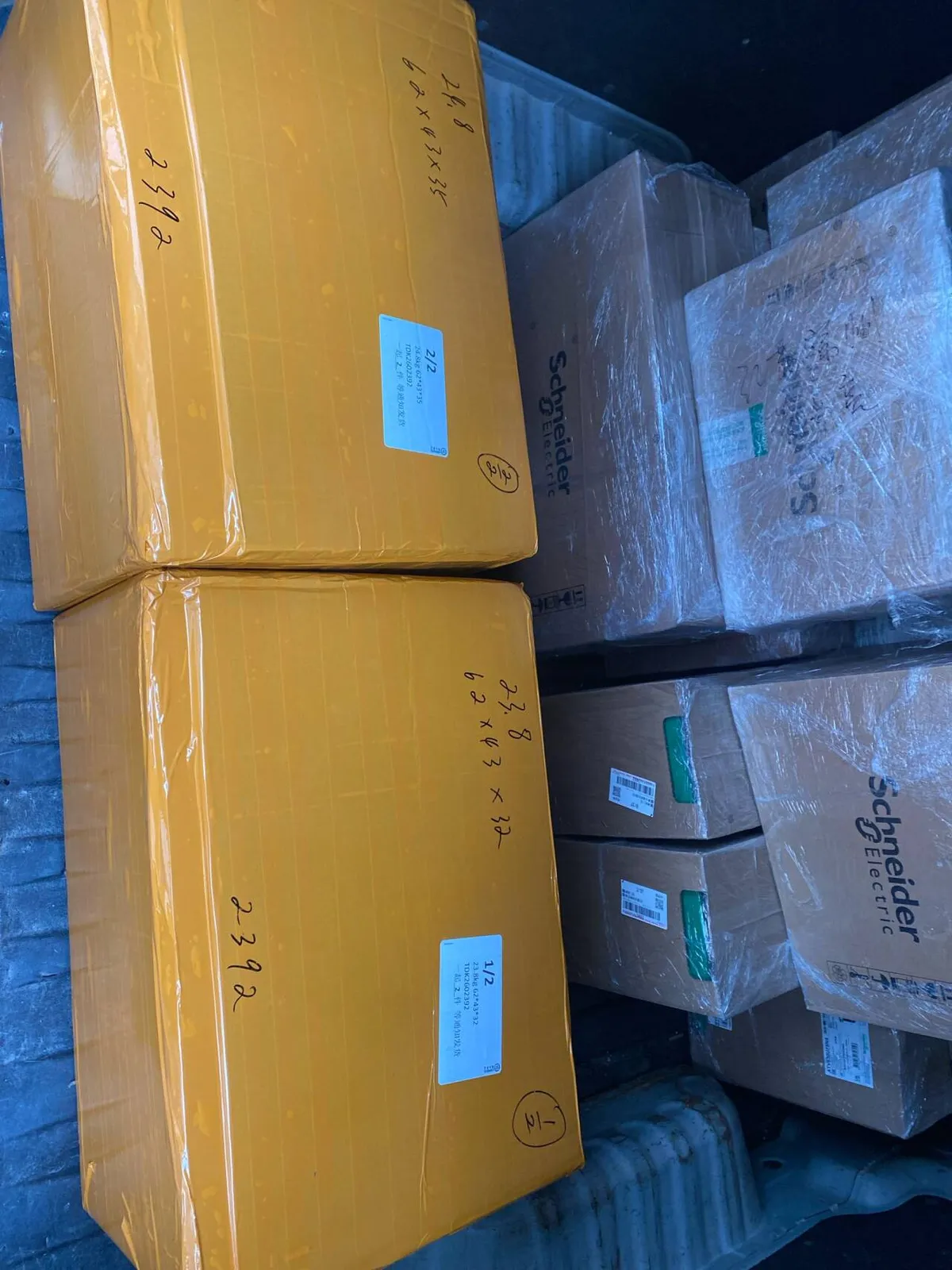
The shipment consisted of 14 cartons supplied by one manufacturer. The modules are moderate in weight but packaged in protective foam-lined cartons that inflate the overall dimensions — a classic low-density electronic cargo profile. The heaviest single carton weighed 31 kg; the lightest 12 kg.
Why This Shipping Method
Air freight was selected over the customer's usual sea freight because of the compressed delivery window.
The production delay at the manufacturer meant the goods would not be ready at the port in time for the next scheduled ocean vessel from Nansha to Jeddah, followed by an inland leg to Riyadh. The realistic door-to-door time for sea freight on this routing was 22–25 days, which would have placed arrival after the maintenance shutdown had already started — unacceptable for a plant that could not stay offline indefinitely.
Air freight was evaluated as the alternative. Guangzhou Baiyun (CAN) has direct freighter and belly-hold capacity to the Middle East, with Riyadh reachable either via a direct service or via a single transshipment at Dubai (DXB). The door-to-door time for air freight was estimated at 5–7 days, which fit the customer's window with margin.
The cost penalty was significant — air freight ran roughly 5 times the sea freight rate for this weight bracket — but the customer's decision was driven by the shutdown deadline, not by the freight invoice. A single day of unscheduled plant downtime was worth substantially more than the freight differential.
Shipping Process
Step 1 — Booking and cargo collection
The cargo was collected from the manufacturer's warehouse in Guangzhou and brought to the forwarder's consolidation point at the airport. The collection was arranged within 24 hours of the manufacturer confirming readiness, as the window did not allow for a standard multi-day consolidation cycle.
Step 2 — Palletization and weight verification
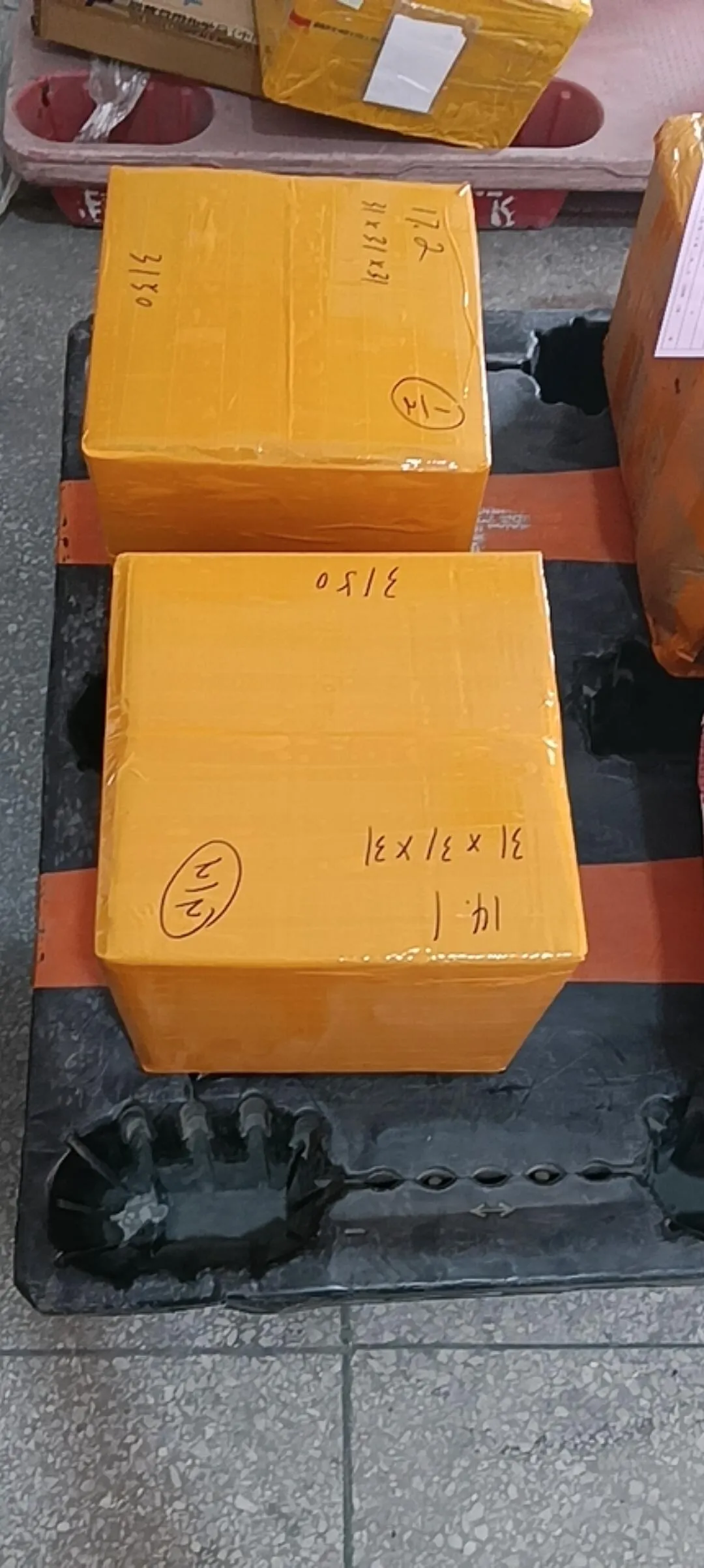
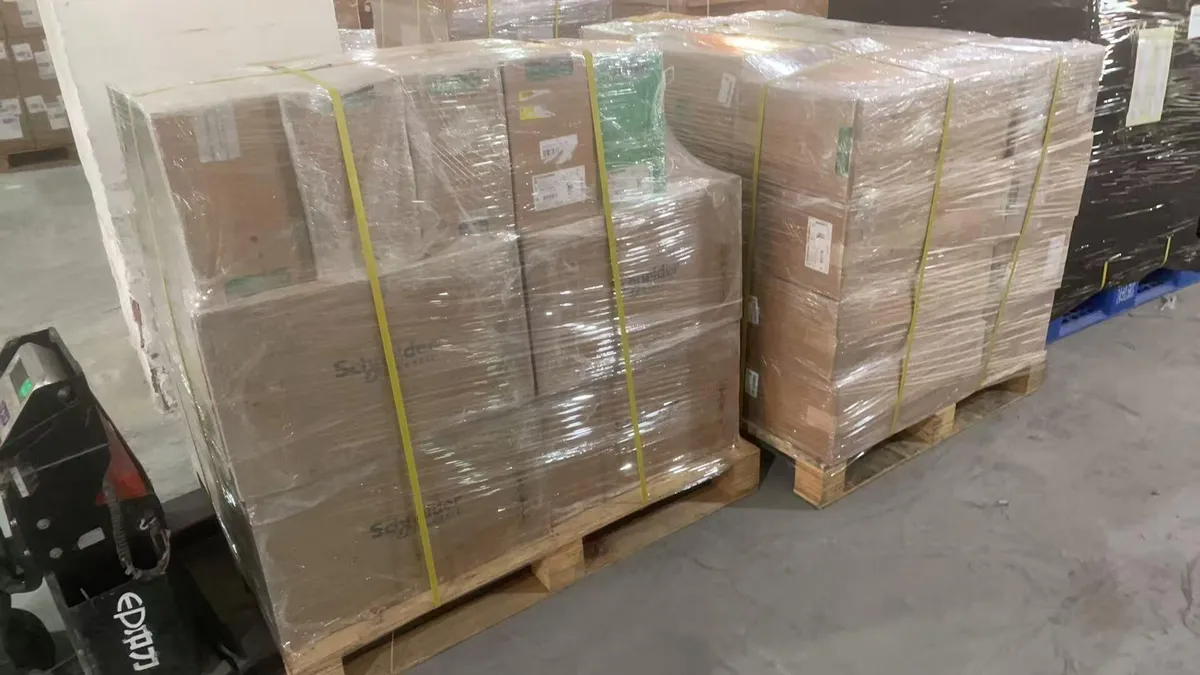
The 14 cartons were consolidated onto two export pallets. Each carton was weighed and measured individually to confirm the volumetric calculation, since the chargeable weight for this cargo was determined by volume rather than gross weight. The volumetric weight was calculated at 326 kg, against a gross weight of 286 kg — the difference representing the 1.9 CBM of air space occupied by the foam packaging.
Step 3 — Export customs declaration
The export declaration was filed in Guangzhou. Control modules of this type are not restricted goods for export from China, and the documentation — commercial invoice, packing list, and declaration — was submitted and cleared within the same working day.
Step 4 — Airline uplift
The cargo was tendered to the airline at Guangzhou Baiyun. The booking used a service routing via Dubai, with a single transshipment onto the Riyadh flight. The main-haul sector was uplifted on a scheduled freighter service.
Step 5 — Import clearance and delivery in Riyadh
On arrival in Riyadh, the shipment moved through import customs with the customer's local clearance agent handling the declaration. The modules were delivered to the customer's warehouse the same day clearance was granted, in time to feed the commissioning schedule.
Challenges Encountered
1. Chargeable weight exceeding gross weight
The control modules are dense electronics packed in protective foam, and the packaging volume pushed the volumetric weight above the gross weight. Every kilogram of chargeable weight directly increased the air freight cost, and with freight at roughly 5 times the sea rate, this had a measurable impact on the total landed cost.
2. Compressed booking window
The manufacturer's production delay left a tight window between cargo readiness and the customer's required arrival date in Riyadh. There was no buffer for a booking rejection, a missed flight, or a consolidation delay at any point in the chain.
3. Transshipment integrity
The single transshipment at Dubai introduced a point where the shipment could be rolled if the connecting flight was full or the ground handling was delayed. Electronic cargo also carries a higher risk of pilferage and rough handling during transfers than bulk commodity freight.
How We Solved Them
For the chargeable weight issue:
Before finalizing the booking, the cartons were reviewed for packaging optimization. The manufacturer's original foam inserts were retained — they are necessary for shock protection — but the outer cartons were re-checked for oversized dimensions. One oversized carton was identified where the internal module was significantly smaller than the box. The module was repacked into a correctly sized carton with equivalent foam protection, reducing the total volume from 2.1 CBM to 1.9 CBM and the chargeable weight from 349 kg to 326 kg. This reduced the freight charge by approximately 6.6% without any reduction in protection.
The volumetric weight was also used as the basis for the rate comparison against sea freight, giving the customer an accurate landed-cost figure rather than a quote based on gross weight alone.
For the compressed window:
The booking was placed the same day cargo readiness was confirmed, and the cargo was collected from the manufacturer within 24 hours rather than waiting for the standard consolidation cycle. The export declaration was prepared in parallel with collection so that clearance and flight uplift could proceed back-to-back.
For transshipment integrity:
The routing via Dubai was chosen over a direct option because the direct service had less frequent departures in the booking week. The connection was verified to have sufficient buffer time for ground handling, and the cargo was shipped on two pallets with full shrink-wrap and strapping to minimize handling risk during the transfer. The shipment was tracked through the transshipment point, with the connection confirmed before the final delivery leg was scheduled.
Final Timeline
| Milestone | Date |
|---|---|
| Cargo ready at manufacturer (Guangzhou) | May 18 |
| Cargo collected, consolidation point | May 19 |
| Palletization and weight verification | May 19 |
| Export customs declaration filed | May 19 |
| Export clearance granted | May 19 |
| Departure Guangzhou Baiyun | May 20 |
| Arrival and transshipment at Dubai | May 21 |
| Arrival Riyadh (RUH) | May 21 |
| Import customs clearance | May 22 |
| Delivery to customer warehouse, Riyadh | May 22 |
Total door-to-door transit time: 4 days
Final Cost
The total air freight cost for this shipment was approximately $1,940, broken down as follows:
- Air freight (326 kg chargeable × $4.7/kg, Guangzhou → Riyadh via Dubai): ~$1,532
- Airport handling and palletization (CAN): ~$120
- Cargo collection, Guangzhou: ~$55
- Export customs clearance: ~$40
- Destination clearance and broker fees (Riyadh): ~$95
- Terminal handling (RUH): ~$58
- Delivery to warehouse in Riyadh: ~$40
The customer settled the main freight and origin charges through DTFU Logistics; destination-side charges were coordinated through their local clearance agent.
Air freight rates on this routing fluctuate with fuel prices and available capacity. The figure above reflects the spot rate at the time of booking (May 2026). For comparison, the sea freight alternative via Nansha → Jeddah → Riyadh was quoted at approximately $780 door-to-door but with a 22–25 day transit time that did not meet the deadline.
Customer Review
"We had a fixed shutdown window and the production delay put us behind schedule. Air freight was the only option that met the plant deadline. The repacking of the oversized carton reduced the chargeable weight noticeably, and the shipment arrived in Riyadh on the expected day with all modules intact. The commissioning went ahead as planned."
— The customer's supply chain manager, Riyadh
Lessons Learned
Several points from this shipment that carry over to future air freight moves of electronic control hardware from China to Saudi Arabia:
-
Packaging dimension review pays for itself on air freight. Electronic cargo is frequently packaged in foam-lined cartons that are larger than the contents require. A check of outer carton dimensions before booking reduced the chargeable weight by over 6% on this shipment. For cargo billed by volume, this is directly equivalent to a freight discount.
-
The volumetric-to-gross weight relationship drives the economics. Quotes based on gross weight alone will understate air freight cost for low-density electronics. Getting an accurate chargeable-weight figure early is what allows a fair comparison against sea freight.
-
A single transshipment can be acceptable when the connection is verified. Air freight does not always require a direct flight. On this route, the Dubai transshipment with a checked connection delivered the same door-to-door time as a direct option, at a better rate.
-
Deadline-driven shipments are a different cost decision. When the alternative is unscheduled plant downtime, air freight at 5 times the sea rate can still be the cheaper option commercially. The freight decision should be framed against the cost of the delay, not against the freight bill in isolation.