Customer Background
The customer is a promotional products and marketing materials importer based in Jeddah, Saudi Arabia, supplying custom-printed promotional goods to businesses, events, and retail campaigns across the kingdom. Their product line includes printed paper fans, giveaways, and event-branded merchandise sourced from Chinese printers.
This order covered paper cup fans — the printed paper fans mounted on a handle, used as promotional giveaways at events and by businesses during the hot season. The order was sourced from a printer in the Qingdao area. Paper cup fans are extremely light and bulky for their volume, which makes them the type of cargo where the freight decision — air or sea, FCL or LCL — is driven entirely by the cost of moving light, bulky goods.
Cargo Information
| Item | Detail |
|---|---|
| Commodity | Paper cup fans (printed promotional fans) |
| Mode | Sea freight, LCL (less than container load) |
| Origin | Qingdao, China |
| Destination | Jeddah, Saudi Arabia |
| Incoterm | FOB Qingdao |
| Gross weight | Approx. 4,200 kg |
| Volume | Approx. 11 CBM |
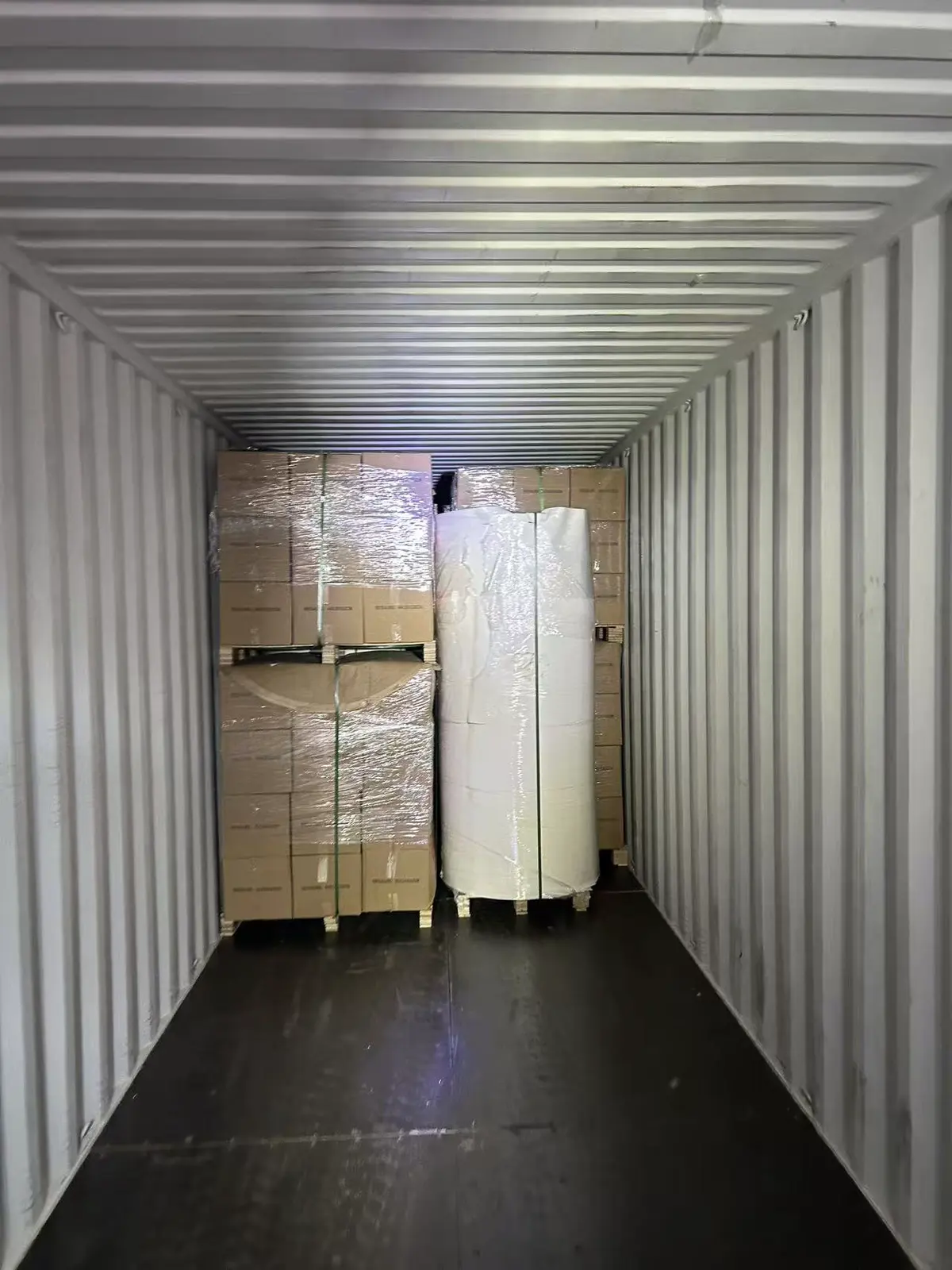
The cargo consisted of paper cup fans in export cartons, printed with the customer's promotional artwork. Paper fans are among the lightest cargo types — the shipment's ~11 CBM of space carries only ~4.2 tons, roughly a 1:2.6 weight-to-volume ratio in favor of volume. The cargo was delivered to a consolidation warehouse in Qingdao before moving to the port.
Why This Shipping Method
The freight decision for paper cup fans is dominated by their weight-to-volume profile. The cargo is voluminous but nearly weightless, and the cost of moving it is set by the volume it occupies, not its weight.
Two alternatives were evaluated against LCL sea freight:
| Option | Cost (approx.) | Transit | Verdict |
|---|---|---|---|
| Air freight (11 CBM chargeable) | ~$1,350 | 4–5 days | Rejected — 2× the cost, promotional goods do not need air speed |
| LCL sea freight (11 CBM) | ~$420 | ~26 days | Selected |
| FCL 20GP (25 CBM usable) | ~$1,600 | ~26 days | Rejected — under half the container used |
Air freight was rejected because the cargo is promotional material with no time-critical commercial value — the customer's event schedule allowed the longer sea transit, and air freight would have roughly doubled the freight cost for a product whose whole purpose is to be inexpensive. A full 20GP container was rejected because the ~11 CBM of fans would have occupied less than half of it, paying for roughly 14 CBM of empty space.
LCL sea freight was the selection: the customer pays only for the ~11 CBM the fans occupy, the transit fits the event schedule, and the per-unit cost is a fraction of the alternatives.
Shipping Process
Step 1 — Delivery and consolidation in Qingdao
The paper cup fans were delivered to a consolidation warehouse in Qingdao, where they were received against the packing list, inspected, and staged for LCL loading. The cartons were consolidated with other Jeddah-bound cargo into a single container.
Step 2 — Export customs declaration
The export declaration was filed in Qingdao. Printed paper fans are not restricted goods for export from China. The commercial invoice, packing list, and declaration were submitted and cleared within one working day.
Step 3 — Ocean freight (LCL)
The consolidated container was loaded onto the vessel at Qingdao and shipped to Jeddah Islamic Port. The LCL consignment was issued a house bill of lading covering the cargo within the shared container. The transit time was approximately 21 days, with a transshipment point on the routing.
Step 4 — Deconsolidation and destination clearance
Upon arrival at Jeddah, the LCL container was deconsolidated at the destination warehouse and the fans were separated from the co-loaded cargo. The import declaration was filed with Saudi customs, and the goods were cleared.
Step 5 — Delivery to customer
The fans were delivered to the customer's warehouse in Jeddah after clearance, in time for the event campaign for which they were ordered.
Challenges Encountered
1. Volume-dominated freight economics
Paper cup fans are the extreme case of a volume-heavy cargo: the ~11 CBM of space carries only ~4.2 tons. The freight cost is entirely set by the volume basis, and the whole commercial decision — air vs sea, FCL vs LCL — turned on which mode charged the customer fairly for that volume. Getting this wrong would have either doubled the freight cost (air) or paid for a container the cargo did not fill (FCL).
2. Light cargo stability in an LCL container
Fans are so light that their cartons can shift or be crushed under heavier co-loads in an LCL container. The cargo shares space with other consignments, and the stability of the light cartons through the transit needed to be managed.
3. Transshipment handling for a soft, light cargo
The LCL routing passed through a transshipment point, adding a handling step. For a light, compressible cargo, the transfer added a point where the shipment could be delayed or the cartons mishandled.
How We Solved Them
For the volume-dominated economics:
The comparison table above was presented to the customer before booking, so the decision was made on the full cost picture rather than on the lowest headline rate alone. LCL sea freight was confirmed as the lowest-cost option that met the event schedule, and the volume basis of the charge was explained upfront — the customer understood that the ~11 CBM of fans, not the weight, set the freight cost.
For light cargo stability:
The fan cartons were consolidated in a way that kept the load stable — the light cartons were packed together and secured within the container's shared space, positioned so they would not shift during transit or bear the weight of heavier co-loads. The cartons were handled to avoid crushing at the consolidation and deconsolidation points.
For transshipment handling:
The LCL booking was made on a service with a single, well-established transshipment point, and the cargo was consolidated to move as a single unit through the transfer. The customer was given a realistic transit-time expectation that included the transshipment, and the shipment was tracked through the transfer point to confirm the connection was made.
Final Timeline
| Milestone | Date |
|---|---|
| Cargo delivered to Qingdao consolidation warehouse | July 22 |
| Inspection and consolidation | July 22 |
| Export customs declaration | July 23 |
| Vessel departure from Qingdao | July 25 |
| Transshipment point | August 1–2 |
| Arrival Jeddah Islamic Port | August 15 |
| Deconsolidation at Jeddah | August 16 |
| Saudi customs clearance completed | August 17 |
| Delivery to customer warehouse, Jeddah | August 18 |
Total door-to-door transit time: 27 days
Final Cost
The total cost for this shipment was approximately $660, broken down as follows:
- Inland delivery and consolidation handling (Qingdao): ~$65
- LCL ocean freight (11 CBM at ~$35/CBM): ~$385
- Export customs clearance: ~$50
- Destination deconsolidation and handling (Jeddah): ~$60
- Destination customs clearance and broker fees: ~$80
- Delivery to warehouse in Jeddah: ~$20
The customer paid the LCL freight and origin charges to DTFU Logistics; destination-side charges were settled through their local broker.
LCL rates on the Qingdao–Jeddah lane fluctuate with season and vessel utilization. The figures above reflect the rate at the time of booking (July 2026). For comparison, air freight on the same volume was quoted at approximately $1,350 with a 4–5 day transit, and a full 20GP at approximately $1,600 — both rejected on cost for a promotional cargo with a flexible schedule.
Customer Review
"The fans are giveaways, so the freight cost is the whole economics of the order. LCL gave us a rate that matched the space we actually used, and the transit fit our event date. We compared air and a full container, and LCL was the obvious choice for this product."
— The customer's procurement manager, Jeddah
Lessons Learned
-
For a volume-dominated cargo, the freight decision is a volume comparison, not a rate comparison. Paper cup fans cost what the space costs, and the correct choice was made by comparing the total cost across air, FCL, and LCL — not by chasing the lowest headline rate. LCL won because it charged for the ~11 CBM actually used.
-
Promotional goods with a flexible schedule should not fly. Air freight at roughly 2× the sea cost buys speed that a giveaway product with a fixed-but-distant event date does not need. The value of the product dictates the mode.
-
Light cargo stability is a real decision in a shared container. Fans are so light they can shift or be crushed under heavier co-loads. Packing the light cartons together, secured and out of the crush zone, protects the goods through an LCL transit.
-
Explaining the basis of the charge is part of the service. The customer's decision was built on understanding that volume, not weight, set the cost. Presenting the comparison upfront turned the freight decision into a transparent choice rather than a surprise on the invoice.