Case Overview
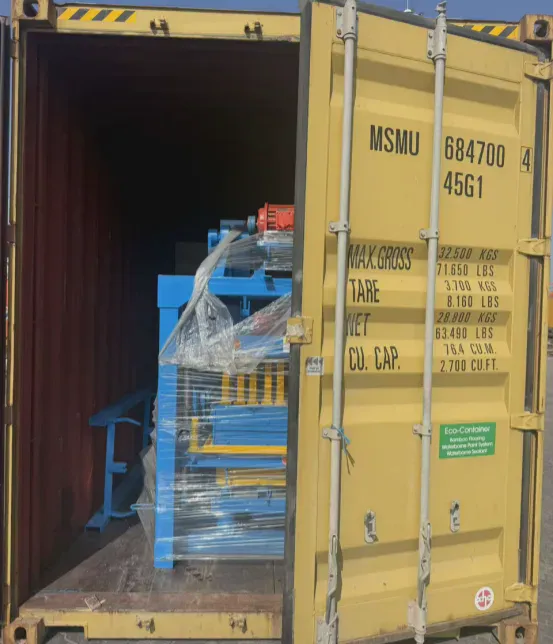
- Commodity: Brick-Making Machine with Auxiliary Equipment
- Cargo Details: 1 Unit (Partially Disassembled) + Spare Parts / ~18,500 KGS / ~60 CBM
- Routing: Port of Qingdao, China (POL) → Port of Jebel Ali, UAE (POD)
- Mode of Transport: Ocean Freight, FCL — 1 × 40HQ
- ETD: April 5, 2026
- Core Challenge: Navigating carrier schedule instability and equipment shortages on the China-Middle East Gulf lane amid cascading disruptions from the Red Sea crisis, while meeting a fixed project deadline at destination.
Operational Context: A Route Under Pressure
By early 2026, the global container shipping network remained in a state of readjustment. The Red Sea security situation — ongoing Houthi attacks on commercial vessels transiting the Bab el-Mandeb strait — had pushed most major carriers to reroute Asia-Europe services around the Cape of Good Hope since late 2024. While the direct Qingdao-to-Jebel Ali service does not pass through the Red Sea, the secondary effects on Middle East Gulf lanes were significant.
1. Tonnage Reallocation and Schedule Reliability
The longer Cape routing on Asia-Europe loops increased each round voyage by roughly 10-14 days. To maintain weekly departures, carriers needed to inject additional vessels into those loops. These vessels were drawn from other services — including the Middle East Gulf strings. The result: fewer spare vessels on the China-UAE lane, tighter schedule adherence, and a higher frequency of blank sailings when a vessel was pulled for the Asia-Europe trade.
For a shipper in Qingdao, this meant vessel options on any given week were fewer than pre-crisis levels, and the remaining options carried a higher risk of last-minute cancellation.
2. Qingdao's Positioning as a Secondary Loading Port
In the Chinese port hierarchy for Middle East services, Shanghai and Ningbo typically load first; Qingdao is called later in the rotation. When a vessel runs behind schedule due to delays at earlier ports, Qingdao is the most likely call to be omitted entirely. For a cargo with an April 5 cutoff, a missed call at Qingdao could mean waiting another 7-10 days for the next non-blanked sailing.
3. 40HQ Availability in North China
The container imbalance triggered by rerouting had a specific impact on high-cube equipment. 40HQ containers are heavily used on the Asia-Europe trade; as those services absorbed more units per voyage (to cover the longer Cape transit), the repositioning flow back to North China loading ports thinned. In Qingdao, securing a 40HQ on short notice without an existing carrier allocation required advance booking and backup planning.
4. Consignee's Deadline Exposure
The UAE consignee — a construction materials manufacturer — had tied the machine's arrival to a production line expansion with contractual delivery obligations to their own downstream buyers. A delay beyond 30 days from ETD would trigger penalty clauses. This added a hard ceiling to the transit time tolerance: the shipment could not afford a rolled booking or an extended port wait.
Execution
Vessel Booking Strategy
The initial booking was made with a carrier offering a Qingdao–Jebel Ali direct service ETD March 28. Two weeks before departure, the carrier notified a blank sailing — the vessel had been reassigned to an Asia-Europe loop to cover Cape routing demands.
The operations team immediately pivoted to an alternate carrier (COSCO) on the same rotation with an April 5 ETD. Two factors made this switch viable:
- Existing carrier allocation relationships provided priority access to the remaining 40HQ slots on the alternate vessel.
- The booking was confirmed and the container pre-positioned at the CY two days before the loading cutoff, insulating against last-minute equipment rollover.
Loading & Customs Preparation
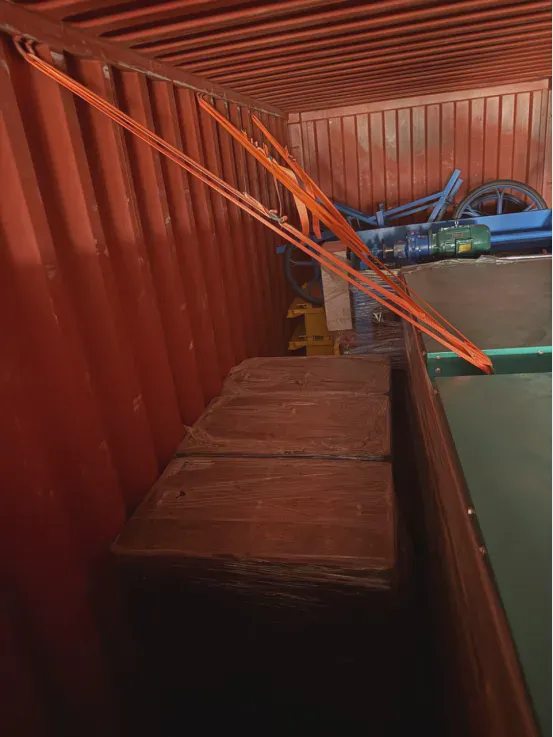
The machine was trucked from Shandong to a Qingdao CFS on April 1. Standard container-loading procedures were followed: partial disassembly of top-mounted components to fit within the 40HQ door height, skid blocking, lashing to container D-rings, and placement of desiccant bags for moisture control during the Arabian Sea crossing.
On the documentation side, a detailed packing list was prepared that broke down the partially-disassembled machine by sub-component — main press frame (HS 8474.80), PLC control cabinet, conveyor unit, and spare mold sets — with individual weights and declared values. UAE Customs at Jebel Ali Free Zone (JAFZA) frequently queries consolidated machinery declarations; itemized breakdowns reduce the likelihood of inspection holds.
The container was sealed and delivered to the CY by April 3, meeting the cutoff.
Outcome
- Vessel & Transit: Loaded on the April 5 vessel as scheduled. Transit time was 21 days, arriving at Jebel Ali on April 26. No port omissions or transshipment delays.
- Customs: Jebel Ali Customs processed the entry in 2 working days without inspection. The itemized packing list was accepted without query.
- Cargo Condition: The consignee confirmed the machine was delivered intact — no rust, no displacement, dry control cabinet.
- Recommissioning: Machine reassembled and commissioned on-site within 4 working days of delivery. The consignee met their downstream production deadline.
"The shipment arrived on time despite the uncertainty on this route. Having a backup vessel identified before the blank sailing was confirmed made the difference — without that, we would have lost at least a week." — Project Logistics Coordinator, UAE
Post-Operation Notes
Three takeaways for heavy machinery shipments on this lane under current conditions:
- Plan for blank sailings as the default, not the exception. On the China-Middle East Gulf lane in 2026, schedule reliability is lower than the pre-crisis baseline. Having an alternate carrier and vessel identified before a blank sailing is announced — rather than scrambling after — keeps a 5-7 day delay from becoming a 14-21 day delay.
- Qingdao's secondary port status matters more when schedules are tight. A cargo ready for an early-April ETD needs to account for the possibility that Qingdao calls get dropped when upstream ports delay the rotation. Booking on a loop where Qingdao is not the final Chinese call reduces this exposure.
- Itemized packing lists are low-effort, high-return insurance at JAFZA. Multi-component machinery declarations invite Customs scrutiny; a granular breakdown that matches HS sub-headings to physical components eliminates the most common trigger for inspection delays.