Customer Background
The customer is a toy and games distributor serving the East Coast of the United States. They were building a catalog of adult puzzle lines aimed at bookstores and specialty retailers, positioned as a complement to their existing family board-game range. The adult segment was a deliberate expansion: it carried higher per-unit margins and a more stable reorder pattern than their children's lines.
They had previously sourced puzzles through domestic distribution and one European brand. Rising landed costs on the European channel and thin stock reliability from domestic middlemen prompted them to test direct importing from China for the first time. They engaged DTFU Logistics with two requirements: the first container had to arrive with the cargo classified correctly so no regulatory hold interrupted a launch that was already scheduled with retail buyers, and the cartons had to arrive in shelf-ready condition — no crush and no moisture staining — because damaged puzzle boxes cannot be re-sold at full value.
Cargo Information
| Item | Detail |
|---|---|
| Commodity | Adult jigsaw puzzles (cardboard, marked 12+) |
| Mode | Ocean freight FCL |
| Origin | Yantian, China |
| Destination | Charleston, SC, United States |
| Incoterm | FOB Yantian |
| Container | 1×40HQ |
| Gross weight | 5,600 kg |
| Volume | 57 CBM |
| Pallets | 21 |
The cargo consisted of multiple jigsaw puzzle SKUs in the adult 1,000-piece format, packed in individual retail cartons and then into export cartons. At 5,600 kg the shipment sat far below the 40HQ payload limit of roughly 26 t — this was a cube-limited, light cargo at 57 CBM against the container's usable volume of about 67 CBM. The governing constraints were therefore the physical condition of the cartons rather than the container's carrying capacity: the pieces are die-cut cardboard that crushes under sustained stacking pressure, and the printed boxes stain if exposed to sustained moisture.
Why This Shipping Method
A 1×40HQ full-container move was selected over LCL consolidation. At 57 CBM the cargo exceeded the volume band where LCL remains cost-effective, and the single-SKU-stable carton mix would have been handled and re-sorted at both the origin consolidation warehouse and the destination depot. Those two extra touch points were the exact risk the customer wanted to avoid: each re-handling is a point where a cardboard carton can be crushed against a forklift blade or stacked under a heavier consignment.
For the ocean leg, an all-water East Coast service via the Panama Canal to Charleston was selected over the West Coast-plus-rail alternative. Charleston is a direct call on the all-water service with no inland leg, which meant exactly one discharge and one drayage move between vessel and warehouse. A West Coast routing would have discharged at Los Angeles/Long Beach, transferred the container to a rail ramp, run the double-stack network to a ramp near the destination, and drayed from there — adding a rail transfer that re-exposes crushable cartons to handling forces. For an East Coast buyer, the all-water service also removed the rail ramp fee from the cost line entirely.
The trade-off was accepted in transit time: the all-water voyage to Charleston runs approximately 30 days at sea, against a door-to-door window that a West Coast-plus-rail routing could sometimes compress. Because the customer's distribution schedule for bookstore and specialty retail order cycles was not rail-speed critical, the longer but handling-light service was the more protective choice for the cargo.
The tariff treatment was reviewed at the costing stage. Puzzles classify under the toys and games heading (HTS 9503), which carries Section 301 List 4A duty of 7.5% on goods of Chinese origin. That rate was factored into the landed-cost model given to the customer so the comparison against their European sourcing reflected the duty-inclusive figure, not the freight quote alone.
Shipping Process
Step 1 — Container drop and loading (Yantian)
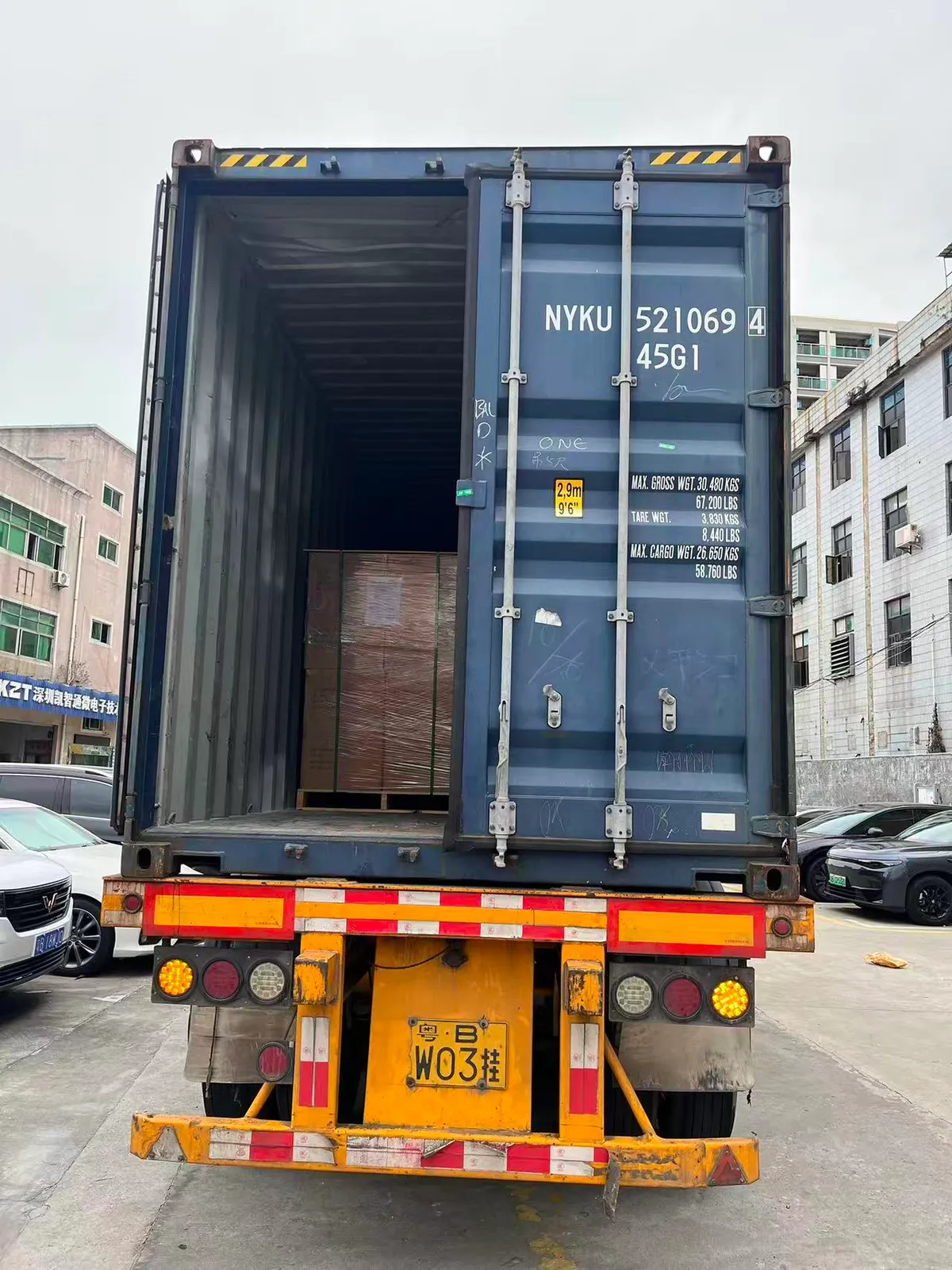
An empty 40HQ was dropped at the manufacturer's loading point near Yantian. Loading followed a pre-agreed plan: the heavier, fully-cased SKUs were allocated to the base of each pallet column, lighter cartons above, with edge protection on the outer corners. Each pallet was shrink-wrapped and the top tier was covered with a moisture-barrier film layer before shrink-wrap. The 21 pallets were positioned to keep cartons clear of the container walls and floor, and the container was sealed with a high-security bolt seal; container and seal numbers were recorded.
Step 2 — Export customs clearance (Yantian)
The commercial invoice, packing list, and export declaration were filed through the China Customs single window. The declared unit values were cross-checked against the packing list so the invoice, export declaration, and the downstream U.S. ISF remained consistent. The "12+" age designation was reflected on the commercial documentation. The declaration cleared the same working day.
Step 3 — Ocean freight (Yantian → Charleston)
The container loaded onto a scheduled all-water East Coast service at Yantian, routing through the Panama Canal to Charleston, South Carolina. The ocean transit took 30 days. The routing passed through tropical latitudes where ambient humidity is high for an extended portion of the voyage, which is the segment the moisture-protection measures in Step 1 were designed to cover.
Step 4 — U.S. customs clearance (Charleston)
The ISF had been filed by DTFU's licensed U.S. customs broker 24 hours before the vessel lading cut-off, using the stuffing location and consolidator data captured at the loading point. On arrival at Charleston, the entry was filed with the cargo declared under the adult-product category consistent with the "12+" age marking. Clearance was granted without examination.
Step 5 — Drayage and delivery (Charleston → warehouse)
The container was drayed from the Charleston terminal to the customer's warehouse. Unloading took approximately two hours; all 21 pallets were received intact, the cartons showed no crush or moisture staining, and the seal number matched the bill of lading.
Challenges Encountered
1. CPSC age-classification verification
Adult jigsaw puzzles marked "12+" fall outside the CPSC's children's-product definition and are therefore exempt from CPSIA small-parts testing and the accompanying General Certificate of Conformity requirement. The risk was the inverse: if the age designation was absent, inconsistent across the product and the paperwork, or ambiguous on the packaging, the U.S. entry could be treated as a children's product, which would have triggered a hold for testing, a demand for a General Certificate of Conformity, or a request for sample retention. For a first container feeding a scheduled retail launch, that outcome would have been more costly than any freight overrun.
2. Moisture and crush risk on the all-water leg
Cardboard is crushable under sustained load and stains permanently when wetted. The 30-day all-water voyage passed through high-humidity latitudes, and the lower pallet tiers carried the full weight of the columns above them for the entire transit. A crushed lower tier or a wetted top tier would have rendered a portion of the shipment unsellable at full retail value — puzzle boxes are not re-packaged like bulk commodity goods.
3. All-water vs West Coast-plus-rail trade-off
The routing decision was not a straight speed comparison. A West Coast-plus-rail service could in some comparisons shorten the door-to-door window, but it added a discharge at Los Angeles/Long Beach, a transfer to a rail ramp, and a rail transit — a second handling leg that re-exposed the crushable cartons to stacking and transfer forces. The decision had to weigh transit time against handling exposure and total cost, with the customer's retail schedule determining which side of the trade-off mattered more.
How We Solved Them
For the CPSC age-classification risk:
The "12+" age designation was verified on the product packaging before booking, and the product was reviewed against the CPSC's children's-product criteria (age 12 and under) to confirm it sat outside that definition. The adult classification was then carried consistently across the commercial invoice, packing list, ISF, and the U.S. entry, so the cargo was declared under the correct product category and was not held for a General Certificate of Conformity. No testing was required and the shipment cleared without examination.
For the moisture and crush risk:
The loading plan placed the heavier, fully-cased SKUs at the base of each pallet column so the lowest tier was the strongest. Every pallet was shrink-wrapped with edge protection, and the top tier — the surface most exposed to condensation during the high-humidity leg — was covered with a moisture-barrier film before shrink-wrap. Cartons were kept clear of the container walls and floor, eliminating direct contact with any condensation that might form on the steel surfaces. The plan was implemented at origin rather than as a corrective measure, so the protection was in place for the full 30 days at sea.
For the routing trade-off:
The all-water Charleston service was selected over West Coast-plus-rail because it eliminated the rail transfer and the second handling leg entirely. Charleston is a direct all-water call, giving the cargo one discharge and one drayage move between the vessel and the warehouse. The slower ocean transit was accepted because the customer's distribution schedule for bookstore and specialty retail order cycles did not depend on rail speed, and the cost comparison confirmed that removing the rail ramp fee and the handling exposure was worth more than the additional days at sea for this cargo.
Final Timeline
| Milestone | Timing |
|---|---|
| Empty container drop and loading (Yantian) | Day 1 |
| Export customs clearance (Yantian) | Day 2 |
| Vessel departure Yantian (all-water via Panama Canal) | Day 3 |
| Arrival Charleston | Day 33 |
| U.S. customs clearance | Day 33 |
| Drayage and warehouse delivery | Day 34 |
Total door-to-door transit time: 34 days (ocean transit 30 days)
Final Cost
| Item | Cost (USD) |
|---|---|
| Ocean freight (1×40HQ, Yantian → Charleston) | $3,700 |
| Origin THC, port fees, documentation | $410 |
| ISF filing | $45 |
| U.S. customs clearance (bond not included) | $160 |
| Charleston terminal handling | $240 |
| Drayage (Charleston terminal → warehouse) | $300 |
| Total door-to-door | $4,855 |
Note: figures reflect the spot rates for this shipment (July 2026) and vary with season, fuel surcharge, and carrier capacity. Section 301 List 4A duty (7.5%) on the puzzle line is collected separately at entry and was quoted to the customer as part of the landed-cost model.
Customer Review
"We were launching the adult line into bookstores on a fixed date, so the two non-negotiables were a correct classification on entry and cartons that could go straight to the shelf. The 12+ designation was verified before the container left, and the cargo came through the 30-day all-water leg with no crush and no moisture staining. The 34-day door-to-door window matched the schedule we had committed to."
— The customer's supply chain manager, East Coast
Lessons Learned
- CPSC classification is a documentation discipline, not a testing event for adult products. The "12+" age designation verified before booking and carried consistently across the invoice, packing list, ISF, and entry is what keeps an adult product out of the children's-product compliance path. A single inconsistent document can flip the cargo into a hold that a retail launch cannot absorb.
- For cardboard and paper cargo, handling count matters as much as transit time. An all-water service with a single discharge protected the cartons better than a faster West Coast-plus-rail routing would have, because every rail transfer is a point where crushable goods are re-exposed to stacking forces.
- Moisture protection for paper goods belongs in the loading plan, not at arrival. Shrink-wrap plus a moisture-barrier film layer on the top tier carried the cargo through 30 days of high-humidity transit without a single stained carton; the measures were applied at origin, not retrofitted after a claim.
- The all-water versus rail decision is a trade-off between speed and exposure, priced against the buyer's schedule. For an East Coast destination with no rail-speed-critical retail cycle, removing the rail ramp fee and the second handling leg outweighed the additional days at sea — a comparison that holds only when the customer's distribution calendar is confirmed first.